 Hin
Hin En
En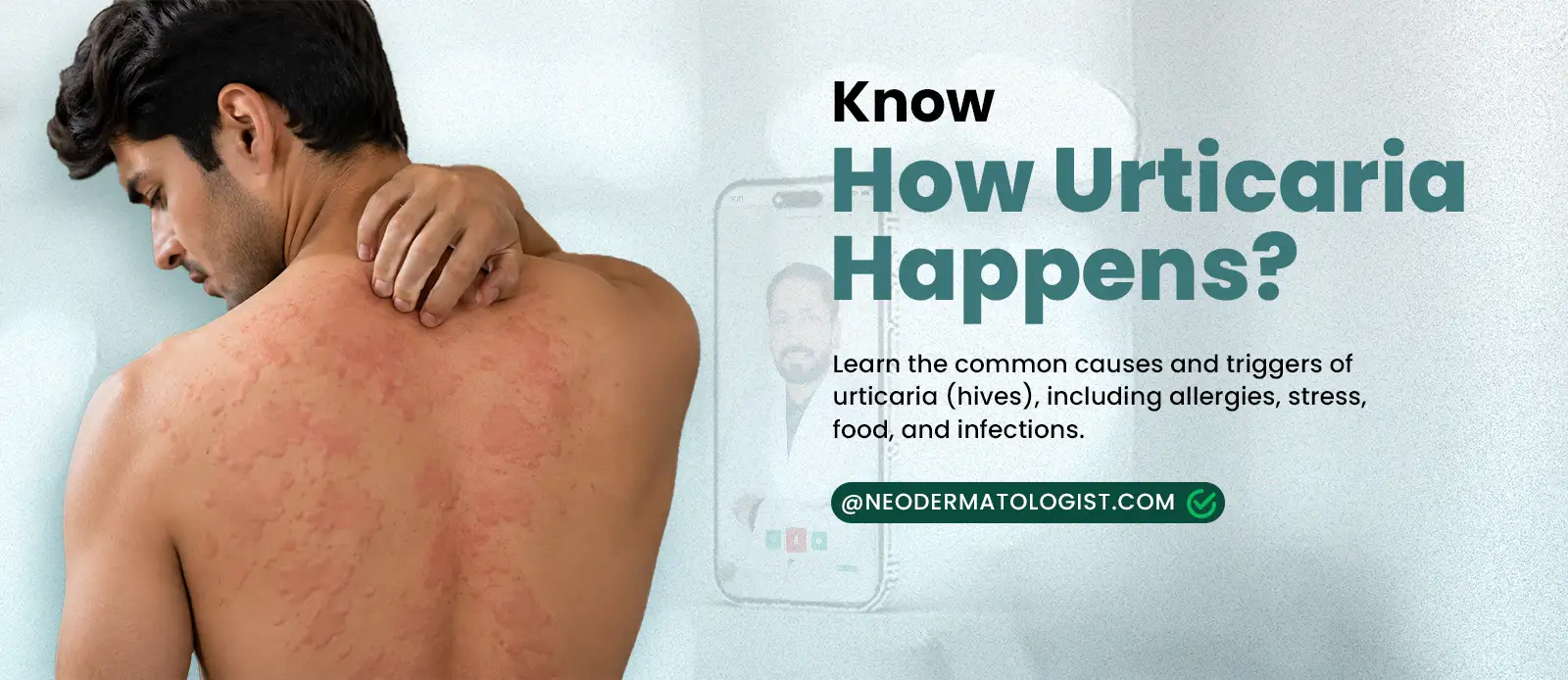


Urticarial Rash Causes: Why Urticaria (Hives) Happens & How to Treat It
Introduction
Hi, I am Dr. Karma Patel, dermatologist, and today I will explain in simple words the urticarial rash causes, why urticaria (hives) happens, and how this condition can be effectively treated.
Urticaria is one of the most common skin problems I see in daily dermatology practice. Many patients come worried because the rash appears suddenly, itches severely, and keeps moving from one area to another. Some fear it is an infection, while others worry it may be serious. That’s why we offer specialized Hives and Urticaria Treatment via our online consultation at NeoDermatologist, where our certified dermatologists provide accurate diagnosis and personalized care to effectively control symptoms and prevent recurrences.
Let’s clear all confusion step by step.
What Is Urticaria (Hives)?
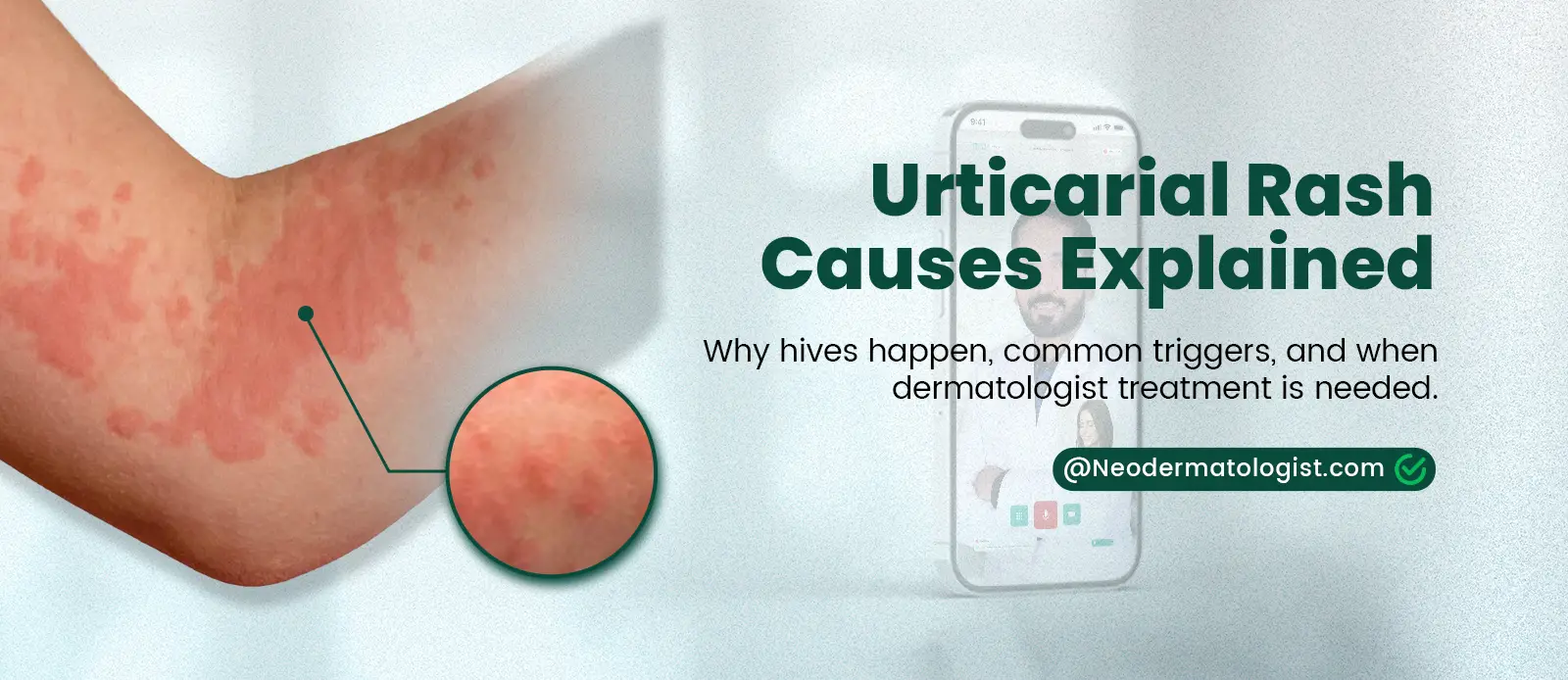
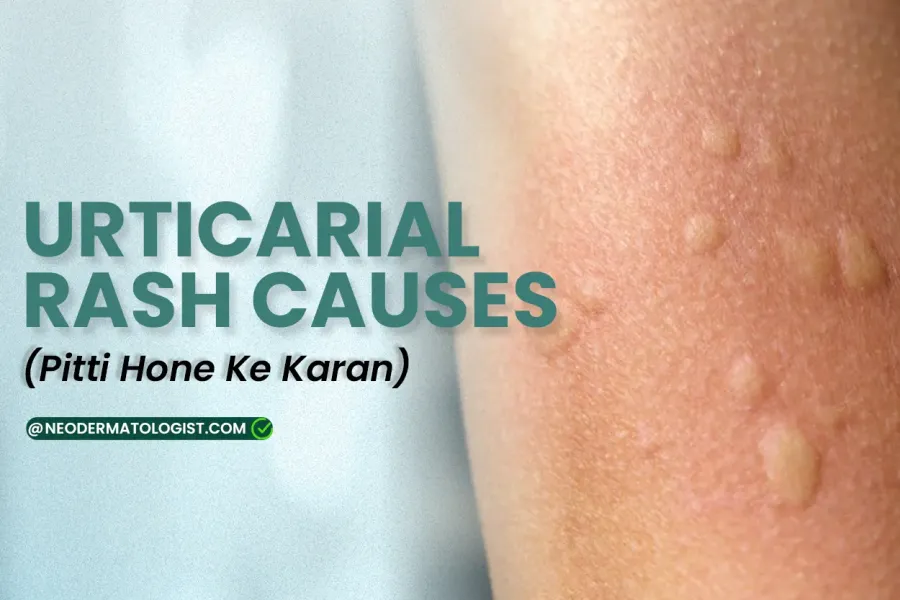
Urticaria, commonly known as hives, is a skin reaction caused by temporary swelling of the superficial skin layers.
It appears as:
- Raised red or skin-colored wheals
- Intense itching or burning
- Lesions that change shape or size
- Rash that disappears without scars
Each hive usually lasts a few minutes to a few hours, but new lesions may continue to appear.
Urticaria is not an infection and is not contagious.
Why Does Urticaria Happen? (Medical Explanation)
Urticaria occurs due to activation of mast cells in the skin.
These cells release chemicals such as:
- Histamine
- Leukotrienes
- Prostaglandins
Histamine causes:
- Leakage of fluid from blood vessels
- Local swelling
- Redness and itching
This reaction is responsible for all symptoms of hives.
Urticarial Rash Causes (Detailed Explanation)
Common urticarial rash causes include:
1. Allergic Reactions
Common triggers include:
- Nuts, eggs, seafood
- Milk or food additives
- Antibiotics
- Painkillers (NSAIDs)
- Insect bites
- Latex exposure
Allergic urticaria usually:
- Appears suddenly
- Improves once the allergen is removed
- Responds well to antihistamines
2. Can Stress Cause Urticaria Hives?
Yes - stress can definitely trigger or worsen urticaria hives.
Clinical studies show that:
- Stress activates neuro-immune pathways
- Increases histamine release
- Prolongs duration of hives
Patients with chronic urticaria often report flare-ups during:
- Emotional stress
- Exams or work pressure
- Anxiety or lack of sleep
Stress may not be the root cause, but it strongly aggravates the condition.
3. Infections as a Cause of Urticaria
Many people do not realize that infections can silently trigger hives.
Common infections include:
- Viral fever
- COVID or flu
- Throat infections
- Dental infections
- Helicobacter pylori infection
- Urinary tract infections
Children commonly develop acute urticaria after viral illnesses.
4. Physical Triggers (Physical Urticaria)
- Heat and sweating
- Cold exposure
- Pressure from belts or tight clothes
- Sun exposure
- Exercise or friction
- Cholinergic urticaria (sweating-related)
- Cold urticaria
- Pressure urticaria
- Solar urticaria
5. Autoimmune Urticaria
- The immune system mistakenly attacks mast cells
- Continuous histamine release occurs
- No obvious allergy is found
- Direct chat access to licensed dermatologists
- No appointments or waiting time
- Easy photo upload for accurate evaluation
- Dermatologist-verified treatment advice

Types of Urticaria Hives (Expanded)
1. Acute Urticaria
- Duration: Less than 6 weeks
- Common in children and young adults
- Usually due to food, medicines, or infection
- Often resolves completely
2. Chronic Urticaria
- Lasts more than 6 weeks
- Occurs daily or intermittently
- Often autoimmune or stress-related
- Requires long-term dermatologist management
Chronic urticaria is not dangerous, but it can significantly affect quality of life.
3. Physical Urticaria
- Heat
- Cold
- Pressure
- Exercise
- Sunlight
4. Inducible Urticaria
- Cold water
- Vibration
- Scratching (dermographism)
Is Urticaria Dangerous? This Is One of the Most Frequently Asked Questions During Online Consultations
In most cases, urticaria is not dangerous and does not damage internal organs.
However, immediate medical attention is required if you experience:
- Swelling of lips or eyelids
- Tongue or throat swelling
- Breathing difficulty
- Sudden drop in blood pressure
This condition is called angioedema and may accompany severe urticaria.
Why Choose Neodermatologist Online Consultation
At Neodermatologist, we provide online dermatology consultations for accurate diagnosis and effective skin treatment - all from the comfort of your home.
Our expert dermatologists, Dr. Ruchir Shah and Dr. Karma Patel, are highly experienced in diagnosing and treating various skin conditions, including urticaria (hives), allergic rashes, chronic itching, and recurrent skin flare-ups.
If you are experiencing recurrent hives, sudden itchy rashes, swelling, or allergy-like symptoms, our online consultation helps identify the exact cause and provides a personalized treatment plan based on your condition.
Case Study: Real Online Urticaria Treatment Success
Patient Name: Rahul Patel
Age: 32 Years
Issue: Recurrent urticaria (hives) causing itchy, raised rashes on the shoulder and upper back for nearly 6 weeks
1. Symptoms:
The patient experienced repeated episodes of intense itching, red raised wheals (hives), and mild burning sensation over the shoulder and upper back. The rashes appeared suddenly, worsened at night, and were often triggered by heat, sweating, or stress. These flare-ups were affecting daily comfort and sleep.
2. Treatment & Result:
After an online consultation, Dr. Ruchir Shah diagnosed the condition as urticaria (hives) and prescribed a personalised treatment plan including anti-allergic medicines, trigger management, skincare guidance, and lifestyle modifications for 4 weeks.
Before & After Results of Online Urticaria Treatment
|
|


With proper treatment and trigger control, the raised wheals reduced significantly, itching improved, and the skin returned to a much calmer and healthier state. This case highlights how early diagnosis and expert treatment can help manage urticaria effectively and reduce recurrent flare-ups.or
Our Clinical Research Insights on Urticaria
According to international dermatology guidelines:
- Over 80% of chronic urticaria cases are autoimmune
- Stress is a proven aggravating factor
- Routine allergy tests are often normal
- Long-term antihistamines are safe when used correctly
- Steroids should be avoided for long-term use
Modern treatment focuses on:
- Identifying triggers
- Controlling histamine release
- Improving patient quality of life
Hives and Urticaria Treatment: What Really Works?
1. Antihistamine Medicines (First-Line Treatment)
- Cetirizine
- Levocetirizine
- Fexofenadine
- Desloratadine
2. Avoiding Triggers That Worsen Hives
- Certain foods (seafood, nuts, eggs, food additives)
- Painkillers (especially NSAIDs)
- Infections
- Heat, cold, pressure, or sweating
- Stress and lack of sleep
3. Short-Term Medicines for Severe Itching
- Short courses of oral corticosteroids (only for brief periods)
- Anti-itch soothing lotions or calamine-based products
4. Advanced Treatment for Chronic Urticaria
- Higher-dose antihistamine therapy
- Immunomodulator medications
- Injectable biologic treatment (for chronic spontaneous urticaria)
5. Stress Control and Lifestyle Support
- Adequate sleep
- Stress management techniques
- Avoiding tight clothing
- Gentle, fragrance-free skincare
- Avoiding excessive heat and hot showers
Important Note
Urticaria treatment should always be individualized. Self-medication or frequent steroid use can worsen symptoms or cause side effects. Consulting a dermatologist ensures safe diagnosis and the right treatment plan.
Self-medication and repeated steroid use without guidance can worsen the condition. For persistent or recurring hives, dermatologist-guided urticaria treatment is the safest and fastest way to get relief.
“If urticaria symptoms worsen or become frequent, consult a certified dermatologist online via our WhatsApp number for a quick, easy, and hassle-free consultation.
When Should You Consult a Dermatologist for Urticaria?
Consult a dermatologist if:
- Hives last more than 6 weeks
- Symptoms return frequently
- Night itching disturbs sleep
- OTC medicines stop working
- You want to identify the root cause
Early diagnosis prevents progression into chronic urticaria.
Other Online Dermatology Services We Offer
- Hair Loss Treatment
- General Skin Consultation
- Inner Parts Itching Treatment
- Vitiligo Treatment
- Psoriasis Treatment
- Scabies Treatment
- Ringworm Treatment
- Androgenetic Alopecia Treatment
Conclusion: Final Words from Dr. Karma Patel
M.B., D.V.D. | Registration No.: G-41460
A dermatologist specializing in tele-dermatology, offering expert care for skin, hair, and nail concerns. With extensive clinical experience, provides effective treatments for acne, hair fall, eczema, vitiligo, hives, scalp issues, ringworm, fungal infections, and more - all accessible through convenient online consultations.






Comments
Ali
Very well explained and easy to understand. I really liked how you covered both the causes and treatment of urticaria in such a simple way. The part about stress and hidden triggers was especially helpful. This blog will definitely help many people manage their hives better ????
मीता पटेल
यह लेख पित्ती (अर्टिकेरिया) को बहुत साफ़ और सरल भाषा में समझाता है। सिर्फ एलर्जी ही नहीं, बल्कि तनाव और ऑटोइम्यून कारणों की जानकारी भी बेहद उपयोगी लगी। इलाज वाला हिस्सा प्रैक्टिकल और भरोसेमंद है।
Chandni Patel
I like how this article goes beyond allergies and explains real triggers like stress, infections, and temperature changes. The clear breakdown helps readers understand why hives recur and why proper dermatology care matters. Very well explained
Post a comment